
Route a Smithville Address Through the Right Records
Lee County keeps the official record. Ownership, appraisal, tax roll, plats, and deed records for Smithville land all sit at the county, while the city answers only municipal questions. So state that split once.
- Search the exact address or owner in the Lee County tax portal.
- Retrieve the assessor or GIS parcel identifier and legal description.
- Check Smithville permit, planning, clerk, and council records.
- Search GSCCCA by current and former names, subdivision, and recorded reference.
- Compare the deed description with map, lot, and jurisdiction evidence.
- Request written zoning verification when classification matters.
A mailing-city match is not a legal boundary. Keeping those two facts apart prevents a city permit applicant from being mistaken for the owner of record on the deed.
Smithville Subdivisions and Tracts in the Records
Smithville publishes no authoritative subdivision inventory or parcel-prefix key. Classify property by record form and legal description instead of an invented neighborhood list.
| Subdivision or tract form | Era or record context | How it appears in Smithville records |
|---|---|---|
| Recorded subdivision lot | Platted development | Subdivision, lot, plat book/page, and county parcel |
| Land-lot tract | Older or rural description | Land lot, district, acreage, and deed book/page |
| Metes-and-bounds parcel | Unplatted or parent tract | Calls, acreage, prior deed, and survey or plat reference |
| Split or combined parcel | Later assessment action | Parent description, new map ID, and dated tax record |
Search the GSCCCA plat index using the county, land lot, district, and any subdivision spelling found in the deed. A city application may name a proposed lot. Only the recorded plat fixes the final record reference.
County Custody and Smithville's Municipal Desk
Two offices anchor most Smithville searches. The county card groups assessment and recording routes, while the city card names the municipal custodian and the development path.
Lee County property custodians
Assessor: 104 Leslie Highway, Suite B
Superior Court Clerk: 100 Leslie Highway
Leesburg, GA 31763
229-759-6010 / 229-759-6018
City of Smithville
116 Main Street
Smithville, GA 31787
229-903-5537
City Clerk, Building and Permit Center, Planning and Development
Smithville lists general weekday hours of 8:00 a.m. to 5:00 p.m. Confirm access and copy procedures before any visit.
What Smithville's City Departments Can Supply
The city's department structure names a Building and Permit Center, Business Licenses, a City Clerk, a Municipal Court, and Planning and Development. Permit forms can be viewed or downloaded, the city says. The Clerk keeps council and historical records. Planning works under the Land Management Ordinance and the comprehensive plan.
| City clue | Likely municipal record | Next confirmation |
|---|---|---|
| Street address and project type | Permit application or inspection file | Parcel ID and permit status |
| Applicant or business name | License, agenda, or project file | Deed owner and exact entity |
| Rezoning or variance | Application, notice, minutes, decision | Current written zoning |
| Historic address | Clerk or council record | Modern parcel crosswalk |
Smithville offers no public parcel card or searchable permit database. A focused request to the right city desk works better than guessing at search fields.
County Forms Recognize Smithville Jurisdiction
Lee County's Subdivision Application names Smithville as a jurisdiction. It calls for plat, legal-description, utility, engineering, and final as-built material. The county Building Permit Application is more detailed. It asks for owner, contractor, address, subdivision, lot, project type and use, square footage, utilities, trades, cost, fee, signature, and date. The Floodplain Development Permit also recognizes municipal jurisdiction. Blank forms prove the expected fields. They do not show that any particular Smithville project was approved, inspected, or completed. For a full parcel file, request the submitted form and every later status document.
Use Lee County Tax Records as Smithville's First Index
The AssuranceGov portal supports Tax Year plus search modes for Name, Bill Number, Company, Parcel, or Address. Name mode offers a starts-with or contains choice for the last name plus an optional first name. Do not guess other mode fields. Start with the correct year. Save the bill or account number, owner or taxpayer label, property location, parcel, and value details, since the result never proves city limits. A tax bill is a dated assessment clue. It is not the recorded conveyance.
Smithville Value Records Need a Date and District
Georgia generally assesses property at 40 percent of fair-market value. Exemptions change the math. Special classifications can also make the taxable assessment differ from the base figure. A countywide assessment may sit on one bill. County, school, city, or other millage components sit beside it. Keep the taxing authority attached to every amount. Smithville publishes no separate multi-year assessment trend table. One digest or county notice cannot manufacture a local trend. Lee County's 2025 rollback review, HB 581 explanation, and 2026 brochure give dated county context. Verify any exact Smithville amount in the applicable digest or tax-office record.
ZIP 31787 Is a Clue, Not Smithville's Border
A Smithville-style address and the 31787 ZIP can guide a property search. They cannot decide the legal boundary. Mailing geography, utility service, school references, and even road names may cross city lines. No consolidated annexation timeline or city parcel-prefix guide is published online. Check the county GIS map. A city boundary layer, a recorded annexation ordinance, the planning jurisdiction field, or written confirmation from both governments can also settle it. When sources disagree, keep both positions and dates. Do not pick the convenient label. The county's official GIS information page explains the mapping source. It also gives a reliable starting point for map access.
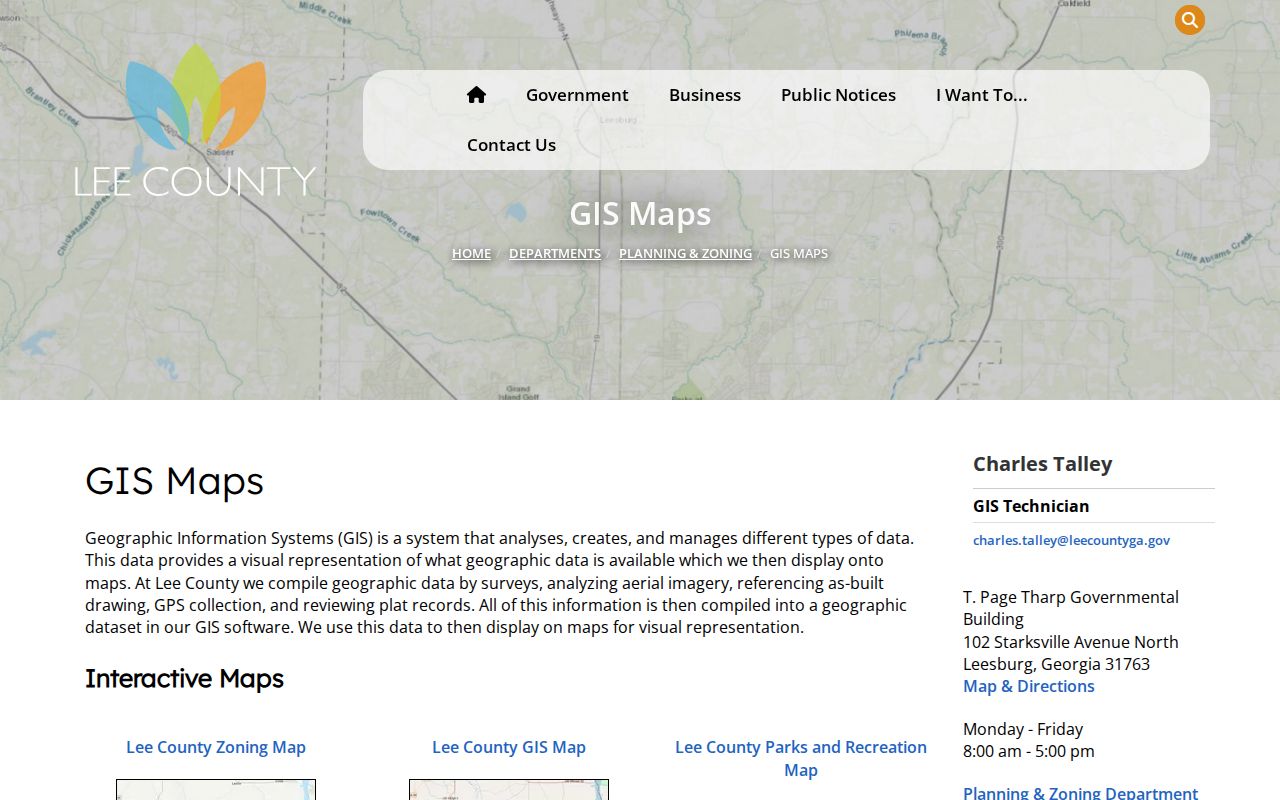
The county GIS page links the map resources. It does not certify any parcel's boundary, city status, or acreage.
Recorded Deeds Set the Ownership Evidence
Search the Georgia Real Estate Index by owner or former owner. Restrict the county to Lee. Review party role, instrument type, and date. For an LLC, trust, estate, or bank, keep the exact legal name and capacity. Use book and page when another record cites it. A security deed, assignment, satisfaction, or lien can affect the parcel without transferring fee ownership. A PT-61 record is a transaction clue. It may not equal fair-market value. So read the deed itself and match its legal description before concluding anything about Smithville property records.
Ask for a Complete Smithville Permit File
A precise request gets faster results. Give the clerk the exact address, the parcel ID, any subdivision and lot, the project name, and a permit or case number. Include a date range. Ask for electronic delivery too. If an attachment needs redaction, request the releasable parts.
For construction files, ask for the application, the issued permit, plans available under public-access rules, inspection entries, corrections, the final inspection, and the certificate of occupancy. Also ask for the fee record. Planning cases are similar. Request the application, staff report, notice, agenda, minutes, decision, conditions, and site plan. Remember that an application is only the first step in Smithville property records. Status terms like issued, expired, inspected, or finaled must come from the file itself.
Older Smithville Property Records Start with Place and Names
Older Smithville property records rarely start with a parcel number. Historic city and council records can supply earlier addresses, road labels, and owner names. Development references help too. From there, the trail widens. County deed records extend the search. So do tax books, Probate estate files, Georgia Archives microfilm, and newspaper archives. Work names and land descriptions alongside the modern address.
An estate file changes the method. A death notice or newspaper item is a lead, not proof of succession. Match the Probate file to the parcel description. Then match any executor, administrator, heirship, or distribution deed to it. The chain can hit an archival gap. When that happens, preserve the last verified book and page for the deed records.
Open Records Is Smithville's Search Fallback
Sometimes the city site lists a department but offers no public result database. That is when open records becomes the Smithville search fallback. Contact the City Clerk or the relevant department with a focused request. Ask for council actions or permits. Planning cases, variances, and licenses work too. Historical address records can be requested by parcel, address, case, and date.
The Georgia Open Records Act sets a response framework, not instant production. An agency may respond within three business days. The response may include the records, a production date and cost estimate, or an exemption explanation. Deeds and plats are different. Those stay with the Superior Court Clerk, not the municipal clerk.
What Smithville Property Records Cannot Establish
Smithville property records connect a county parcel with city planning and administrative events. But they have limits. A permit can name an owner, contractor, or applicant without changing title. A zoning notice announces a process, not an approval. A GIS map is not a survey. A tax bill is not a title opinion. For a formal boundary, title, or zoning conclusion, obtain the proper survey. Also obtain recorded deed evidence, professional review, or written agency verification.
Use public records responsibly. Verify title with recorded instruments and never use owner information to stalk, harass, or harm anyone.
Keep every city and county source labeled with its date. That habit pays off when a Smithville search ends without a clear match. Write down the parcel number. Add the legal description, the dates searched, the names tried, and each office contacted. A documented stopping point helps the city clerk, county planner, or assessor. It also helps the Superior Court Clerk find the missing file or older index.
This also guards against a common mix-up. A nearby unincorporated parcel can get folded into the wrong municipal history. This happens just because both properties share the same mailing city. The parcel number and legal description keep Smithville property records straight.